
What is tech neck?
Tech neck is a new name for an old term simply neck pain that’s caused by repetitive strain and injury to the muscles and other tissue structures of the cervical spine. Our reliance on screen is the root cause of tech neck. Tech neck is any form of chronic neck or shoulder pain, soreness or stiffness caused by poor posture whilst using technology such as mobile phones and computers.
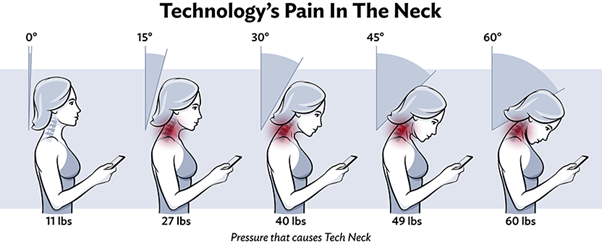
By lowering your head a few degrees, you are putting extra pressure on their neck and shoulders. If you lower your head to 60 degrees that is 27kg extra weight on your shoulders. This is approximately the weight of an 8-year-old child.
When the muscles tire and puts pressure on the nerves in the neck, this results in pain in a person’s neck and can also cause referred pain in the arms and hands. Over time, staying in this position can increase the forces acting on your shoulders, neck and upper back muscles and put uneven pressure on your spine. Tech neck can cause problems in other areas of your body, not just your neck and shoulders. Additional spinal pressure in your neck can lead to mid and lower-back pain as well as headaches.
While using a mobile phone, you’re likely to bring it closer to your face to see the screen more clearly. When looking at our phones we often stay in the same position for long periods of time. As a result, your body must work harder to maintain itself than when you are moving and doing physical activity.
Your body wants to have visual comfort over postural comfort. This means you will tend to change your posture to accommodate vision with your screen and can cause musculoskeletal fatigue.
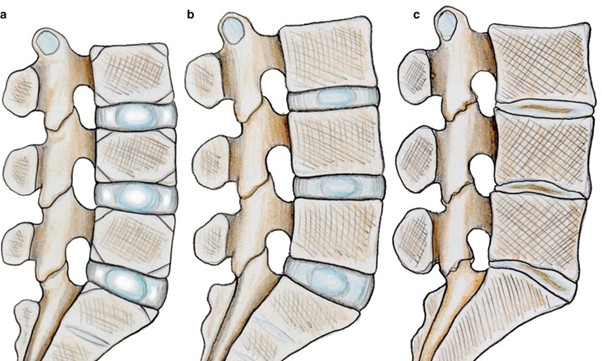
As you age, the discs of your spine become narrowed, and you lose some of the support they provide. This leads to more pressure on the nerve roots that appear from the spine at the base of the neck. Some people may notice an increased level of fatigue and discomfort.
Young people are likely to be less affected by poor posture, although as they grow over time the effects will take their toll on their bodies. In a person early 20s when the muscles become weak due to poor posture can cause extra strain. This is why not only in young people but in all generations, it is important to stretch daily, change positions and move throughout the day.
Ways to improve your computer posture include:
- Place your screen 20–30 inches away from your eyes, which is about an arm’s length.
- Use a computer monitor or laptop stand to help raise your screen to the right level. Your eye height should be about 1/2 inch to 1½ inches higher than the top characters on your screen to allow for a 15-degree eye gaze.
- Sit with your head, hips and spine stacked.
- Keep your wrists straight and your elbows bent at about 90-degree angles.
- Keep your knees aligned with your hips and your feet flat on the floor.
When you are looking straight ahead, your neck, back and upper shoulder muscles get a chance to relax. This prevents uneven pressure on the nerve supply of these muscle groups.
The aim of good posture is to ensure your head is upright, that your ears are always in line with your shoulders, and in turn your shoulders are inline and over your hips. It is important to fine ways to keep you moving throughout the day, something as simple as getting up to makes yourself a drink or getting up every so often to do a lap of the office.
Changes to improve tech neck.
- Raise the phone. Move the phone, laptop or computer screens up closer to eye level so your head doesn’t lean forward.
- Take regular breaks. Take time away from electrical devices, whether they are hand help or on a desk. If necessary, set an alarm as a prompt to stop doing whatever it is your doing.
- Stand up straight. Good posture, tuck your chin in and shoulders back, helps keep the body aligned in a neutral position.
- Arch and stretch. Arch the neck and upper back backward regularly to relieve muscle pain and make yourself more comfortable.
Exercise regularly. A strong, flexible back and neck can cope with stress better. The more active you are the less likely you are to suffer, as the muscles are often built-up during exercise.